



Brands who take the approach of truly understanding their customer experience (CX), understanding the journey a customer takes with is foundational to building meaningful interactions with them. A well-mapped customer journey helps businesses optimize touchpoints, eliminate pain points, and create a seamless and engaging experience that fosters conversion and loyalty. To succeed at this, knowing how to map out that customer journey is critical, in this article I’ll attempt to lay out the basics and then explore a real-world example with Starbucks.
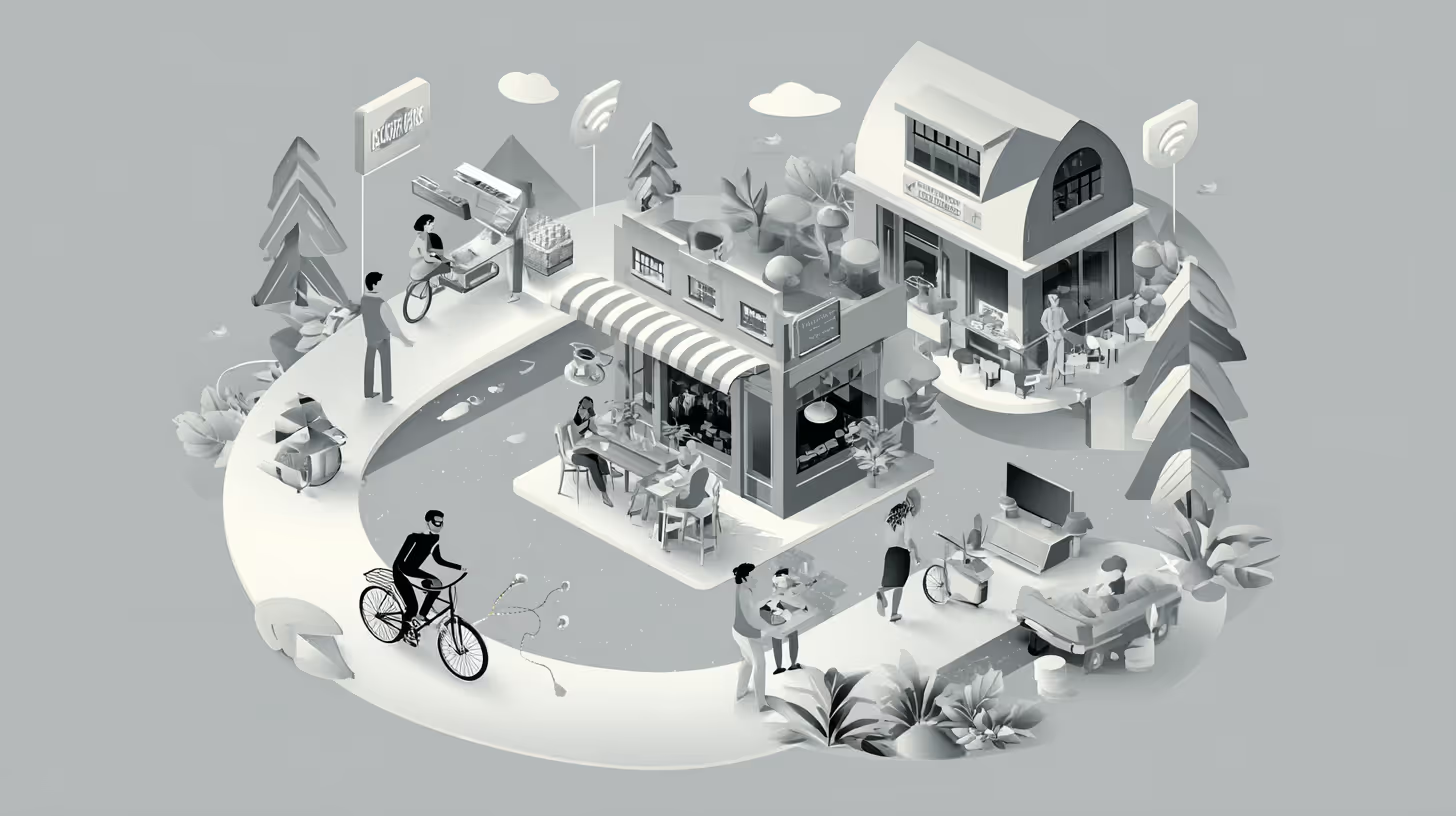
A customer journey map is a visual representation of a customer’s experience with a brand, from initial awareness to post-purchase interactions. It outlines key touchpoints, emotions, and opportunities for engagement at each stage. The goal? To step into the customer’s shoes and identify what works, what frustrates, and what converts.
Key Benefits of Customer Journey Mapping:
Empathy: Helps teams understand customer emotions and needs. Without empathy, there is no engagement.
Optimization: Identifies inefficiencies and pain points in the experience. This is where you refine your approach, whether it’s real world or digital, to eliminate friction.
Alignment: Ensures all teams work towards a unified customer experience. This gets your internal teams and partners to a place where there’s a clear understanding of the experience desired.
Innovation: Finds opportunities born out of the research and insights to impress the customer and bring them back.

A typical customer journey consists of five major stages:
Awareness: The customer first learns about the brand.
Consideration: The customer researches and evaluates options.
Purchase: The customer makes a transaction.
Experience & Usage: The customer uses the product/service.
Loyalty & Advocacy: The customer returns or recommends the brand.
Each stage contains multiple touchpoints where interactions occur. Now, let’s apply this framework to a familiar brand: Starbucks.
Customer Journey Map Example: Starbucks
Persona: Emily: a busy young professional who loves coffee
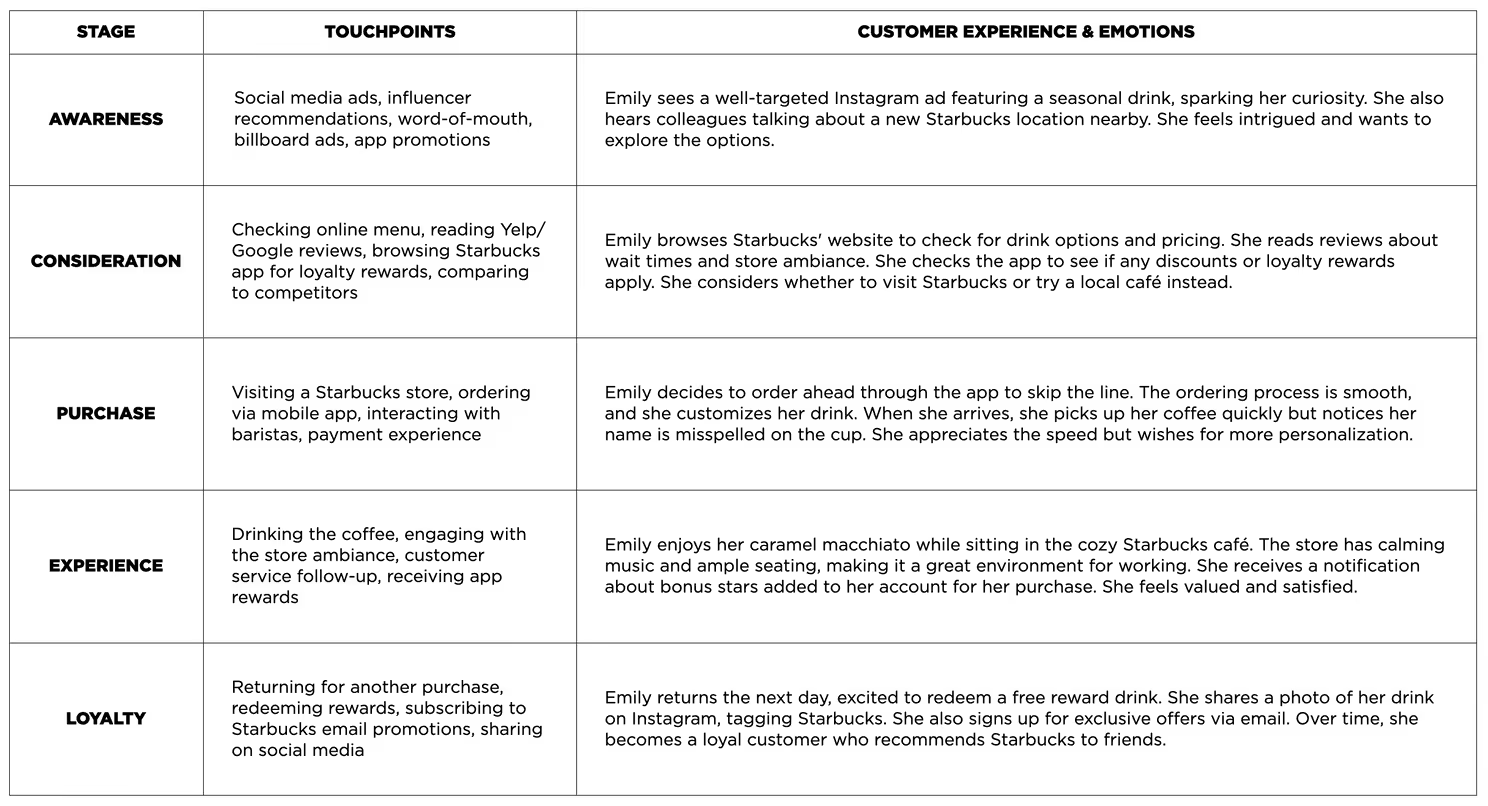
A customer journey map is a visual tool / schematic that outlines the steps a customer takes when interacting with a brand. It’s typically laid out in a grid format, with visual elements like icons or emotion lines to make it easy to understand. Best practices include using real quotes or data for genuine details, assigning ownership to internal teams, and updating the map regularly as customer needs evolve. Done right, it becomes a shared blueprint for creating smoother, more impactful customer experiences.
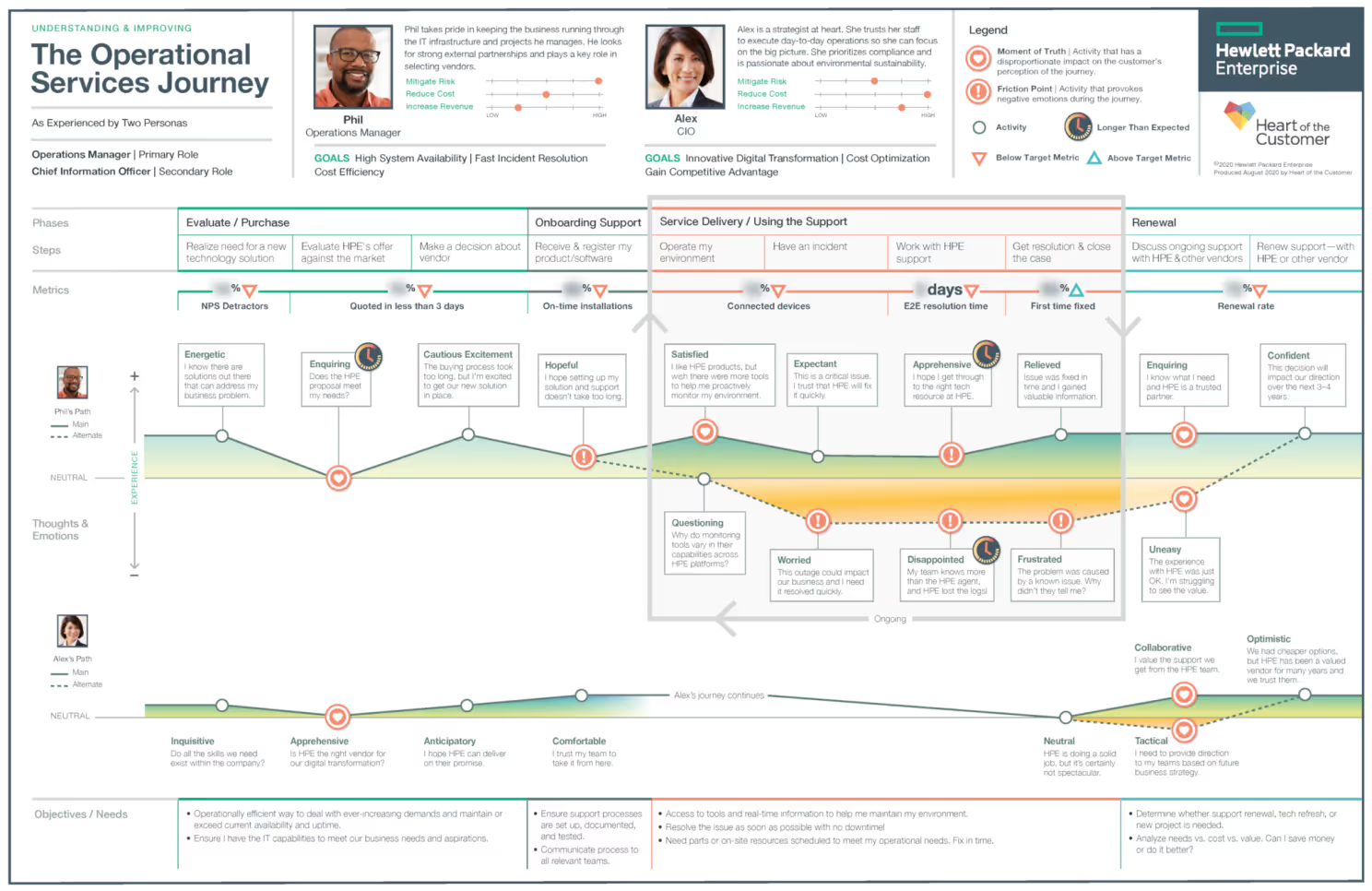
Below are some solid tools to assist with the creation of CX maps, some more complicated than others.
Smaply
Best for: Collaborative mapping and persona development
UXPressia
Best for: Data-enriched journey mapping with visuals
Airtable
Best for: Structured journey mapping with a database backbone
Change management is a critical part of the customer experience (CX) mapping process because creating an effective journey map often reveals the need for shifts in processes, tools, or team responsibilities. At its core, change management is a structured approach to transitioning individuals, teams, and organizations from a current state to a desired state. In CX mapping, it ensures that the insights uncovered—like pain points, inefficiencies, or gaps in communication—translate into real, sustainable improvements across departments.
Without a solid change management strategy and process, even the most insightful journey map could become a forgotten document. It’s what bridges the gap between mapping the ideal experience and actually delivering it, helping teams adapt to new workflows, adopt new technologies, and stay aligned on a customer-first mindset.
Customer journey mapping is an invaluable tool for crafting superior brand experiences. When done well, it ensures that every touchpoint is optimized to maximize engagement, satisfaction, and loyalty. As Starbucks has demonstrated, a well-thought-out journey leads to strong customer attachment and advocacy.
For brands and agency partners, the challenge is not just to map the journey but to find the insights into how to enhance it at every turn. Brands that master this will be the ones customers return to and the ones that grow.