



We have been doing digital strategy for going on 20 years, since before it was called “digital strategy”, in all that time there is one simple truth: the channels that win are the channels that remove friction. And for years, SMS has been the necessary evil, semi-ubiquitous, yes, but creatively starved. A blunt instrument in the customer communications world without a doubt.
Now let’s talk about RCS (Rich Communication Services), the long-overdue evolution of text messaging that finally gives brands a meaningful, modern avenue to show up where consumers already live: their default messaging app.
And for brands that give a damn about engagement?
RCS is the closest thing we’ve had to a mobile messaging evolution in years.

RCS doesn’t just level up SMS, it detonates it.
We’re talking:
This is what happens when messaging finally joins the modern UX world.
RCS regularly delivers 4–10x higher engagement than SMS, and it’s not magic. It’s simply giving people what they’re used to in every other app: clarity, interactivity, and immediacy.
When the conversion funnel is reduced to a tap inside the message thread, drop-off becomes a rounding error.
Relative CTR vs SMS : RCS Baseline 3–7× higher in many campaigns
Engagement time: SMS is usually seconds, RCS Up to 45 seconds interacting with rich content
Conversion rate: RCS Baseline Often 30–60% higher than SMS
Casas Bahia campaign → 1.6× higher conversion rate and 17% increase in revenue using RCS
Subway promotion campaign → 140% higher click-through rate vs traditional SMS
BMW customer engagement campaign → 4× higher engagement rate vs SMS messaging
Citadium Black Friday campaign → 12× higher engagement vs standard SMS promotion
Done right, RCS isn’t a campaign, it’s an ecosystem touchpoint.
Brands can deploy:
It’s like handing your brand a native mobile playground without the headache of building or maintaining yet another app.
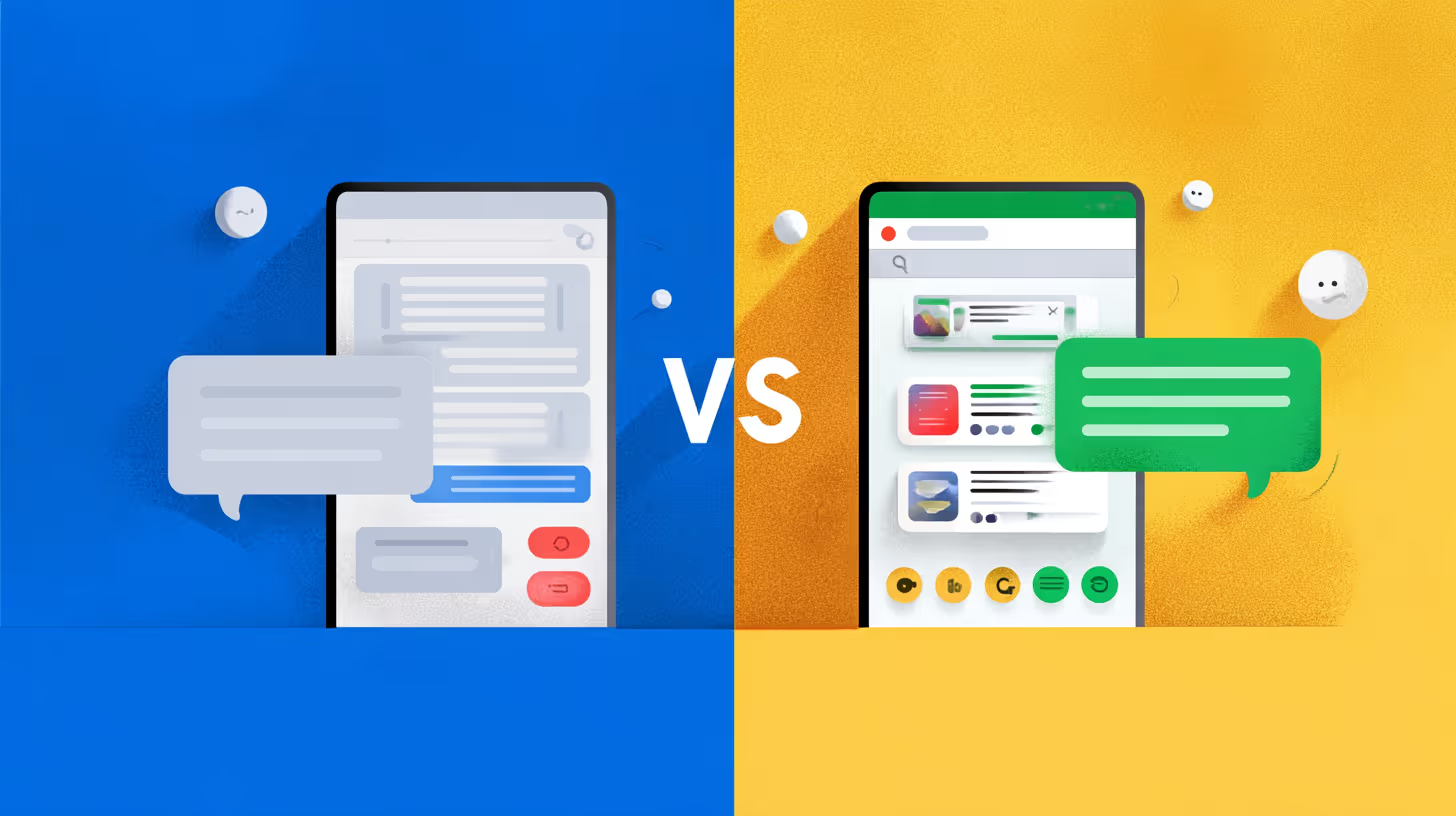
Android is fully in the game. Apple is finally warming up to RCS, but until rollout is complete, you’re speaking only to the 40–45% of U.S. users on Android (a much larger share internationally).
Be smart, you plan for this divide, not ignore it.
RCS pricing sits above SMS. Templates, verification, and carrier requirements add complexity. But this is one of those scituations where cost-per-engagement and cost-per-conversion matter far more than cost-per-send. When the performance curve rises, the economics are more easy to justify.
RCS exposes weak CRM hygiene instantly. You can’t brute-force your way through this channel.
You need:
It’s a strategist’s playground, and a lazy marketer’s nightmare.
RCS templates and campaigns must be approved. That slows down the cowboys but protects the audience.
For brands, the upside is simple: When your message is verified and branded, trust grows, period.

Just because RCS can do more doesn’t mean you should cram the kitchen sink into every message. UX best practices should still be your guardrails.
If your “conversation” reads like a newsletter, you’ve already lost.
Understand your Android/iOS split.
Build journeys that adapt.
RCS is powerful precisely because it’s personal.
Abuse that access and the user will shut you down instantly.
Here’s the Tattoo Digital take: RCS is absolutely a strategic multiplier, and I hate that buzzword.
It delivers:
RCS is the logical evolution of messaging and the rare innovation that actually improves the customer journey instead of making it more difficult. The advantages are easy to see.
Brands that lean in now shape the playbook. You will either be on the train or get hit by it.