


For years across my career, “content marketing” was treated as a tactic. Brands created blogs, social posts, videos, and ebooks to drive traffic, improve SEO rankings, and generate leads. To be honest, that framing no longer matches how the internet works.
Search visibility
Content is no longer just promotional material. It has become operational requirement of your infrastructure. In recent years a shift happened because digital discovery changed. Users no longer move through clean, predictable funnels. They gather information from AI tools, Reddit, YouTube, review platforms, social search, and industry communities long before they visit a company’s website.
At the same time, AI has fundamentally changed the value of generic content.

That approach is losing effectiveness because commodity content is now easy to generate. AI can produce endless SEO articles rapidly. As a result, quantity is no longer a differentiator, quality is.
This is especially important as AI systems increasingly shape discovery.

Large language models and AI search systems evaluate brands based on the quality and clarity of the information they publish.
In many ways, a company’s content ecosystem has become machine-readable proof of competence. That is very different from the old idea of “marketing content.” The companies gaining visibility today are not simply publishing more.
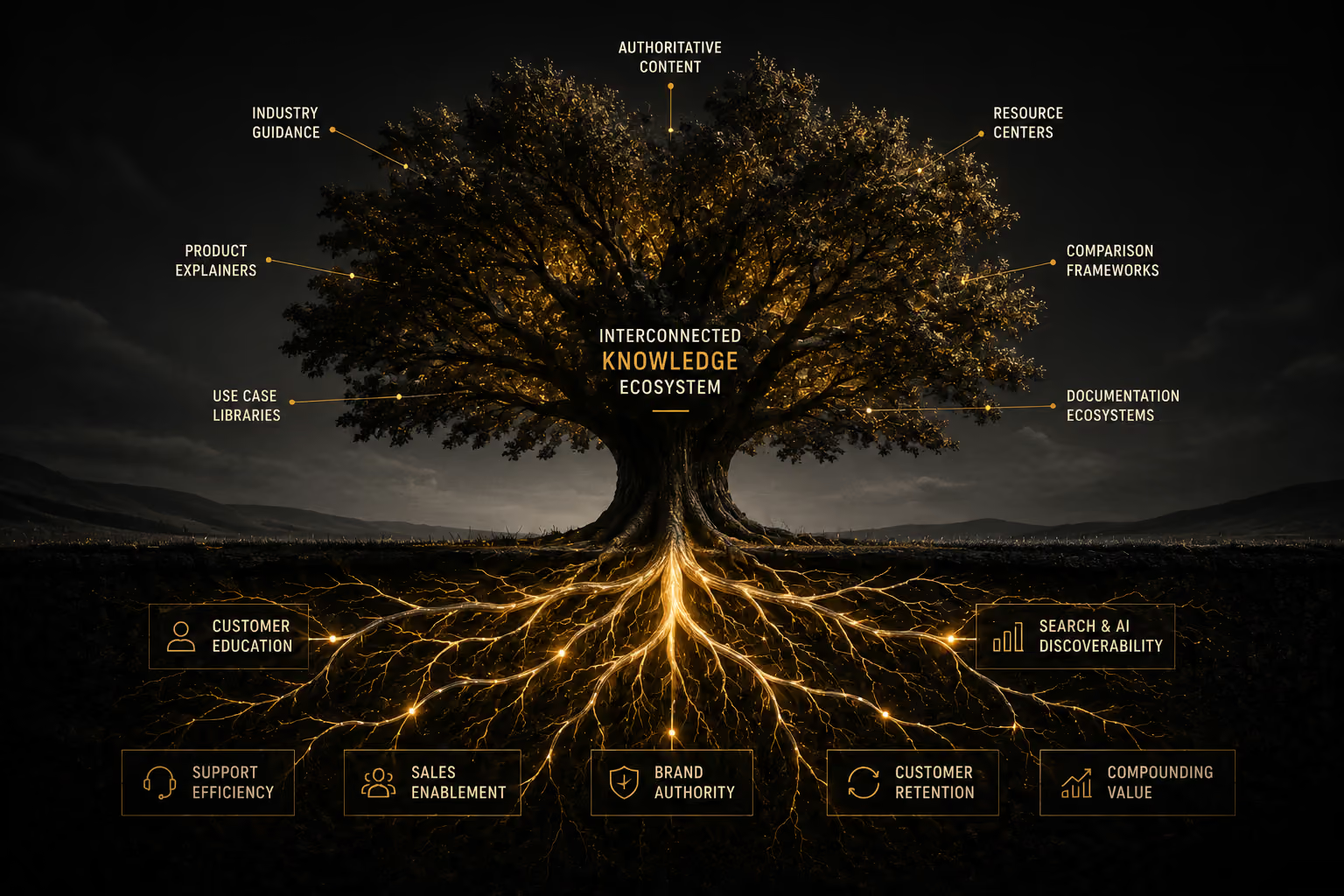
These systems support customers, sales teams, search engines, and AI platforms simultaneously. This also changes how organizations should think about content internally.

Organizations still operating with a campaign-only mindset are often producing large amounts of disconnected content without building long-term informational value. Meanwhile, stronger brands are creating structured ecosystems of knowledge that compound over time.
That is no longer just marketing activity. It's part of the company’s operational and strategic infrastructure.
Today, the companies that win are the ones that communicate expertise clearly, structure information effectively, and build systems that continuously educate both humans and machines. They are the companies that understand strategy and systematic approach to content.
Content is no longer a side function of marketing. It is one of the primary ways modern organizations establish authority and remain discoverable.